So, trust is pretty much at the center of the economic universe. It is the life blood of most human cooperation, doubly so in a capitalist economy. The thing about trust is that we just can’t seem to escape a need for it. When we don’t trust each other, we trust in contracts, laws, and the legal system. We trust in them so that we can limit the amount of faith we need to have in our business partners. However, these intitution are created and administered by the American Aristocracy.[*] At first blush, it appears as though we are placing our trust in an impartial and fair institution[†], but in effect, we are really just shifting our trust to those who control the system; who I will call Aristocrats.[‡]
So now we’ve given these folks our trust. What do they do with it? Should we trust them? What happens if we do? What happens if we don’t?
Dr. Seuss comes to mind here, in his book “Did I Ever Tell You How Lucky You Are?” There is a town with only one bee, but the town’s people don’t think the bee is working hard enough. So they hire a member of their community to supervise the bee, and he becomes a Bee Watcher. However, the bee doesn’t work any harder, so the people decide someone needs to watch the Bee Watcher, enter the Bee Watcher Watcher. This cycle repeats itself over and over, until everyone in town is a Bee Watcher Watcher Watcher…
This story illustrates a point I want to make:
We should not want/try avoid the trust issue. It is involved in so much more than economics, it is vital for almost all human interaction and cooperation. The closer we get to trust, the better off everyone is, which is why honesty is such an important principle.
So, in addition to (or perhaps intead of) creating hedges to protect us from the effects of abused trust, we ought to focus more on highlighting the importance of trust. We ought to find innovative and inspired ways to cultivate trust among each other and across cultures.
Is the human race capable of making and living with such a commitment? Can those who trust fully withstand the injustices of those who will undoubtably violate trust? Can we deal with the consequences of a world without contracts?
Capitalism is based on self-interest, which can be, but frequently is not, alligned with the common good. Not exactly the ideal system for trust to flourish in. So, to answer the question of condition or problem, I am going to rule that a lack of trust is definitely a problem. What is more, I am going to say that it is a problem inextricably linked to capitalist self-interest. In such a system, where the chief motive is to make one self better off, trust will always be an issue.[§]
----------------------------------------------------
[*] I’m going to assume that if you have the power/authority to author, interpret, and administer the rules of the game, you are part of the de facto aristocracy.
[†] This is what a middle class white kid from Troutdale might think at first blush. Others may have had much different first impressions of some of our governing institutions.
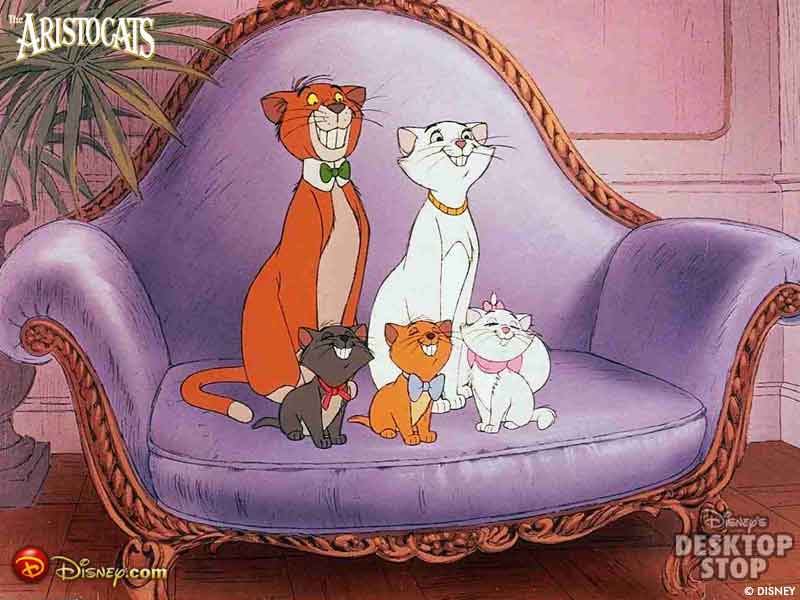
[‡] Not to be confused with these guys.
[§] Again, not trying to bash capitalism here, just trying to identify conditions vs. problems, and how to best look at them in order to start thinking about solutions.


7 comments:
I'm not in the least bit qualified to discuss capitalism or economics of any kind. But I do think that trust is foundationally crucial to the success of all human interactions.
Ditto Nicea.
Excellent illumination of the role of trust in our institutions, and an intriguing question regarding human nature and its effects on human institutions.
I think that I have to go with the cynics and say that in a society that values pluralism, civic order can probably only be maintained via enforced and enforceable contracts.
Though I hope for and work towards a time in which trust alone would inform behavior, I don't really believe that it will ever arrive. Perhaps neuroscience will eventually solve the question as to why some value and engender trust and other don't. Maybe it will eventually even come up with a practical solution for those defects that cause (most of) us to violate trust and cultivate suspicion.
Are we fundamentally self-interested or can we be altruistic? Trust only works if the latter is true. I think both, to varying degrees in each individual, but our self-interest seems to be the more powerful component of our psychic makeup almost universally. The body wants to survive. Whatever helps us think and sacrifice (be it mind, superego, spirit, etc.) can sometimes override that instinct, but it's hard. (I'm not a firm believer in the mind/body dichotomy, anyway.)
I think you're right on in seeing trust and human emotion as the basis for any and all human institutions. I'm just not sure that universal trust is likely (or even necessarily desirable).
In the mean time, we'll just have to keep placing our trust in the aristocracy.
Would it be worth thinking about whether there is a better place to put it, or should I just move on to another topic?
now there's a storm in my brain, too. i need some kool-aid now.
i like this topic, insofar as it lets me hear you and justin talk smart.
Do we really trust the aristocracy? I mean, is "trust" the right word for the power we cede them?
I don't doubt that we're being played. I'm just not sure that our trust is what allows that.
The problem with power is that it's so, so complex. To model our situation as a monolithic bunch of plebes being manipulated by a monolithic smaller bunch of aristocrats unfortunately oversimplifies the situation. I'd venture to say that just about anyone who has access to, say, a blog, and the time to post and/or comment on it is an aristocrat relative to the vast majority of others, who are in turn aristocrats to others, etc. (It's turtles all the way down.) And even the richest among us is at risk of being manipulated not only by other rich but by the power and influence of "public ideas" you astutely reference in your 2 November post.
You may be interested in reading Discipline and Punish by Michel Foucault (as well as his later work); his ideas about what he calls power-knowledge and later governmentality are interesting and seem to speak to some of the issues you're raising in recent posts. His History of Sexuality is pretty fascinating too.
Brian and Megan,
I need your new address so we can send our christmas card....email me at redhotsilver@msn.com
Arien
Post a Comment